
Council of Commissioners Holds Its Fifth Regular Meeting
02 Sep 2026
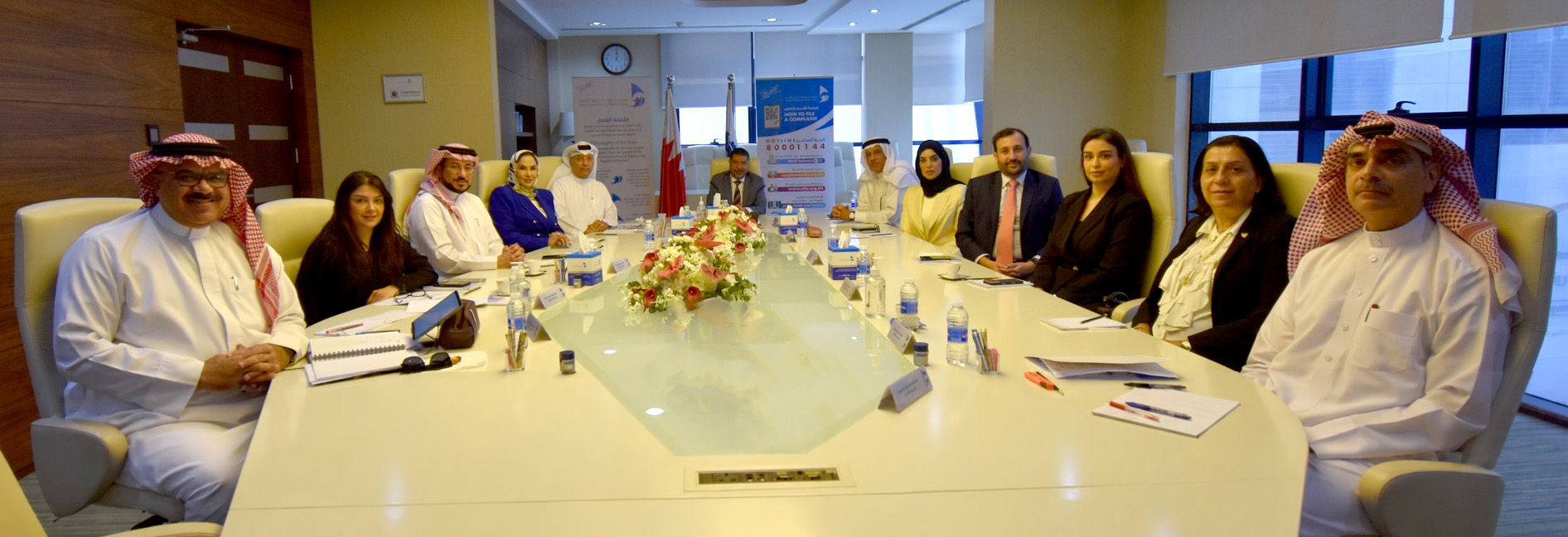
Chaired by Eng. Ali Ahmed Alderazi, Chairperson of the National Institution for Human Rights (NIHR), the Council of Commissioners held its fifth regular meeting, with the participation of Council members and in the presence of the Secretary-General. The Council discussed a number of topics and programs related to the Institution’s work in the areas of field visits, complaints and monitoring, rights and freedoms, and children’s rights.
The Council reviewed the work of its committees over the past three months, which included conducting field visits to a number of facilities falling within the mandate of the Detention & Facilities Visitation Committee, with the aim of assessing the level of services and care provided, recording observations, and referring reports and recommendations to the relevant authorities for follow-up. The Council was also briefed on the Complaint, Monitoring & Follow-up Committee’s handling of 111 cases received by the Institution and the measures taken in relation to them, as well as the General Rights and Freedoms Committee’s efforts to provide written contributions to relevant international mechanisms and strengthen cooperation with relevant stakeholders. In the area of children’s rights, the Council followed up on a number of programs and activities, including six cases in which guidance on procedures was provided, field visits, and the organization of eight activities for children, in addition to participation in specialized events and the implementation of a workshop on human rights education.
As part of its efforts to keep pace with rapid developments in the digital sphere, the Council discussed arrangements for holding the regional workshop on “Responsible Governance of Artificial Intelligence in Arab States” later this month. The workshop is organized by the National Institution for Human Rights in the Kingdom of Bahrain, in cooperation with the Arab Network for National Human Rights Institutions, the United Nations Development Programme, and the Arab Information and Communication Technologies Organization. It aims to promote AI governance from a human rights-based perspective by facilitating the exchange of expertise and experiences, highlighting leading global and regional practices, and discussing the principles of transparency, accountability, non-discrimination, and participation. The workshop also seeks to develop practical steps to enhance regional coordination and cooperation and support the development of effective frameworks and policies for the responsible use of artificial intelligence in a manner that respects human rights principles.
The Council also approved the organization of a series of monthly lectures for civil society organizations that are members of the four working groups. The lectures will address a number of priority human rights issues with the aim of exchanging knowledge and expertise, building capacities, and expanding opportunities for communication, cooperation, and partnership with civil society organizations.
The Council concluded its meeting by approving the General Secretariat’s report for the second quarter of the current year, covering April, May, and June.