NIHR Concludes Seventh Edition of Human Rights Training Program for National Intelligence Service Personnel
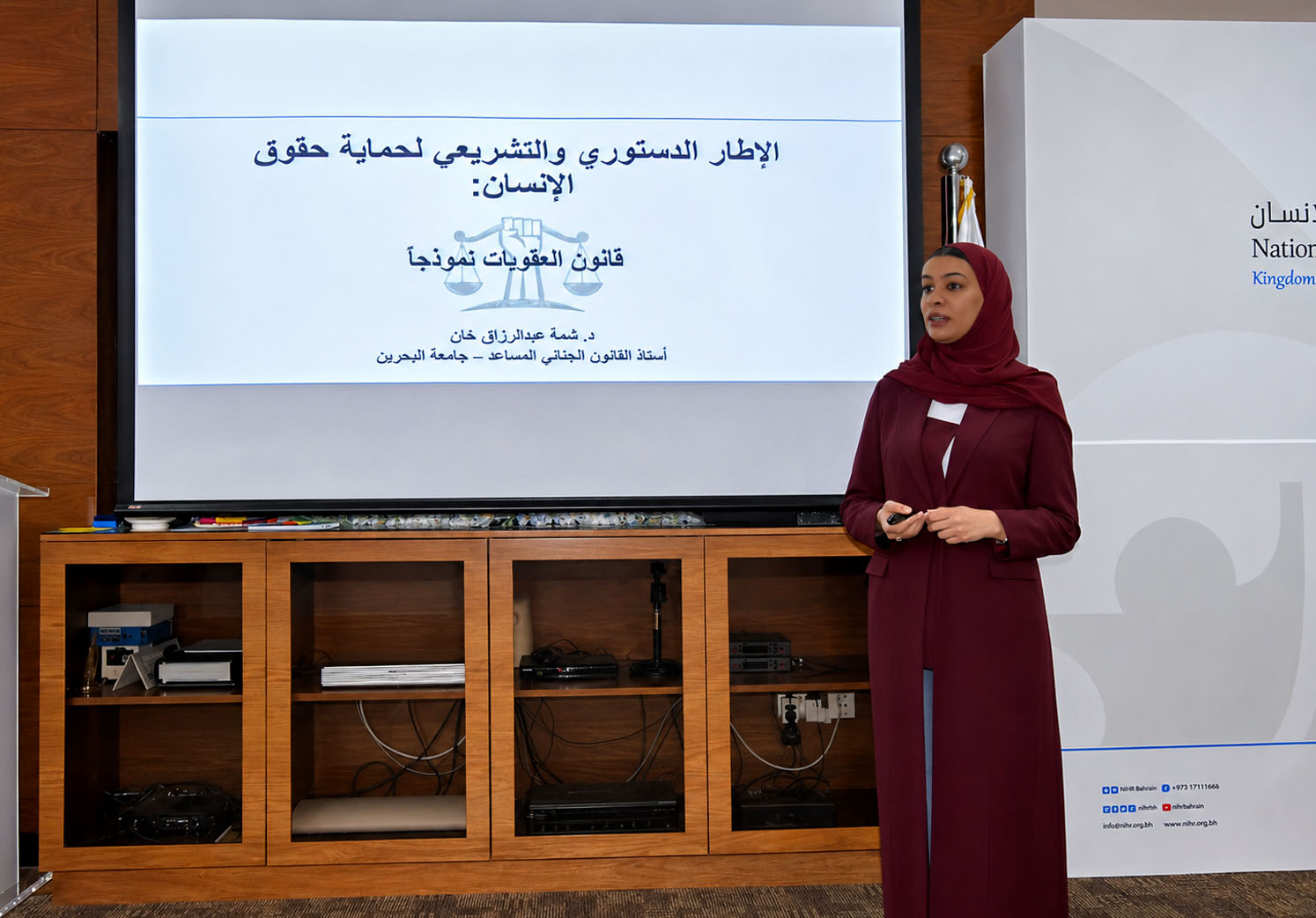
The National Institution for Human Rights (NIHR), in cooperation with the Office of the Inspector General of the National Intelligence Service, concluded the seventh edition of its human rights training program for Service personnel with a lecture titled “The Constitutional and Legislative Framework for the Protection of Human Rights: The Penal Code as a Model,” delivered by Dr. Shamma Abdulrazak Khan, Assistant Professor of Criminal Law at the University of Bahrain.
The lecture addressed the constitutional and legislative framework for the protection of human rights in the Kingdom of Bahrain, focusing on the role of the Penal Code in safeguarding fundamental rights and freedoms and the complementary relationship between constitutional provisions and criminal legislation in establishing the necessary legal safeguards. It also highlighted the importance of striking a balance between protecting society, maintaining security and public order, and respecting individual rights and freedoms.
The lecture further examined key constitutional safeguards governing criminalization and punishment, including the principle of legality in criminal law, the non-retroactivity of laws, individual criminal responsibility, and the proportionality of penalties. It also highlighted the role of Bahrain’s Penal Code in protecting fundamental rights and freedoms, particularly the right to life and physical integrity, personal liberty, privacy, reputation, and private property, thereby reinforcing the rule of law and ensuring the protection of individual rights.